Operating this corridor
How the Hue to Lao Bao run is operated
Most of the day is decided before you wake up. Dispatch builds the pickup order the evening
before you travel, and that order decides what time the border sees you. These are the parts
people usually ask about after the fact, because nobody mentions them beforehand.
The pickup order, and why the car leaves at 04:00
The pickup window runs 04:00 to 05:30. Your slot depends on your address as much as on your
booking time: hotels in An Cuu, Phu Hoi and the Citadel lanes go first because they sit on the
way out of the city, and riders at Phu Bai and Lang Co are collected next because the car
passes them on QL1A anyway. The car idles outside while you find it, which is why a five-minute
delay for one passenger rarely costs the group anything.
The early start is not a gimmick. QL1A carries heavy truck traffic from first light, and a car
that leaves at 06:00 reaches the Lao Bao counter closer to 10:00 than 08:30. The quiet window
at the gate runs roughly 08:30 to 11:00; after that the freight traffic on the East-West
corridor builds and the same counter takes longer for everyone in it.
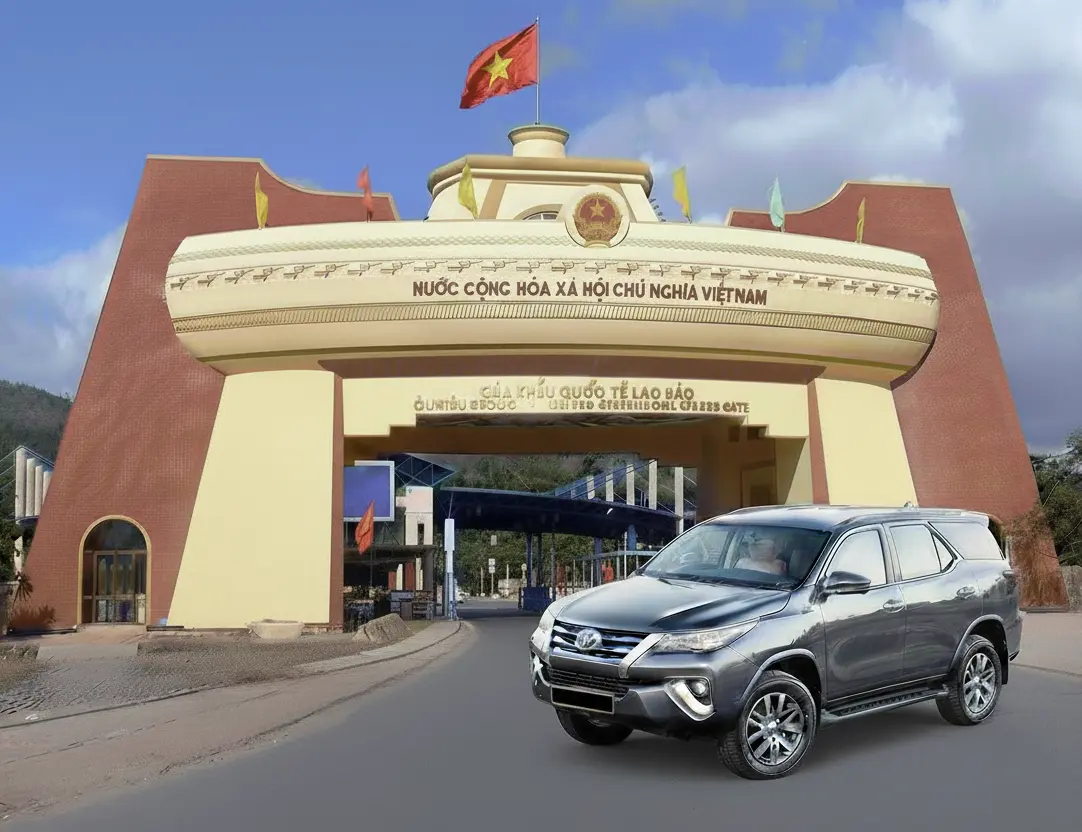
The Vietnam side passenger gate runs about 07:00 to 19:00, which sounds like plenty of room
until you count four hours of driving each way.
The step by step walkthrough
follows one car through the whole day if you want the timings in order.
What the Quang Tri crew does at the two counters
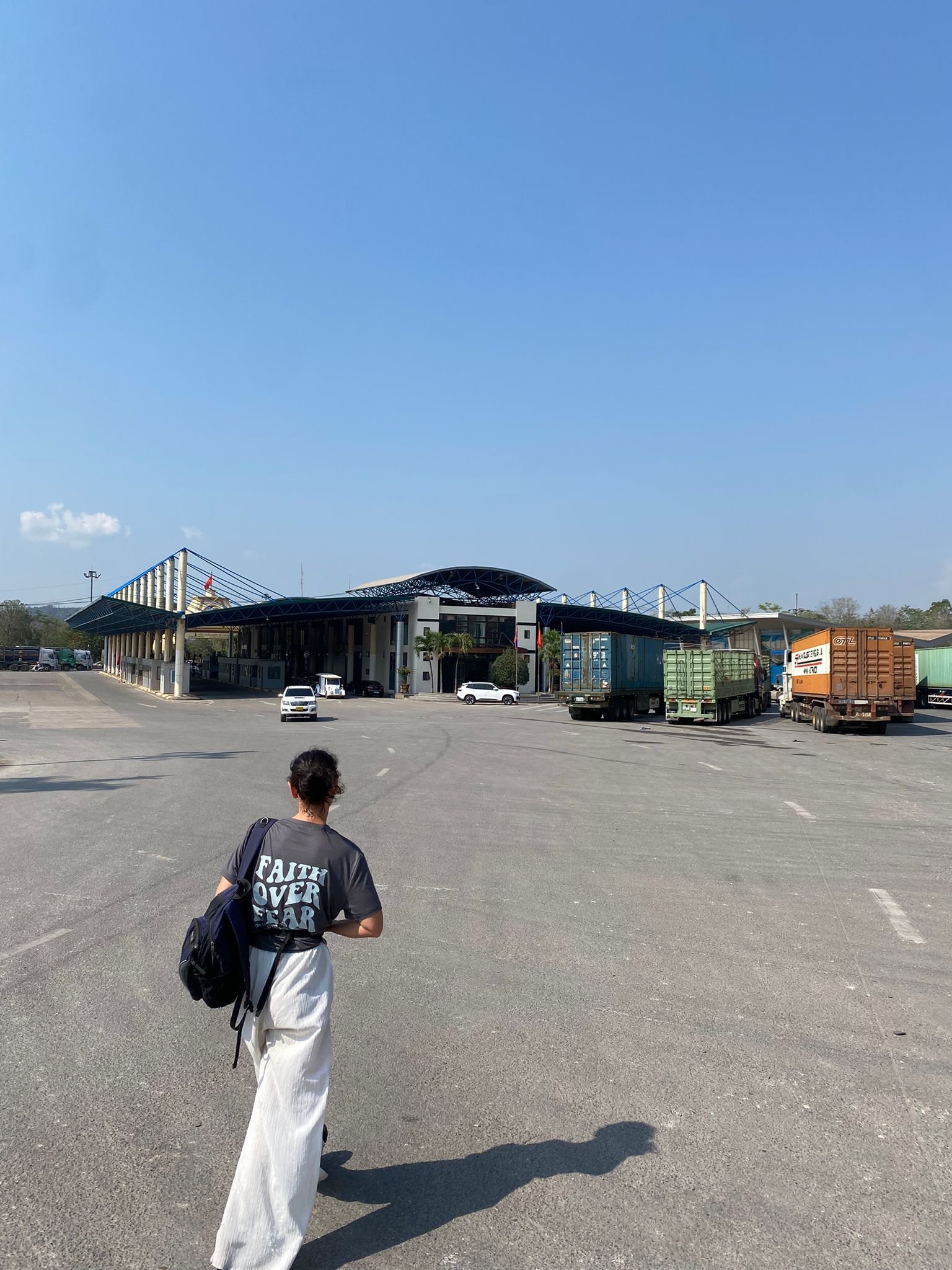
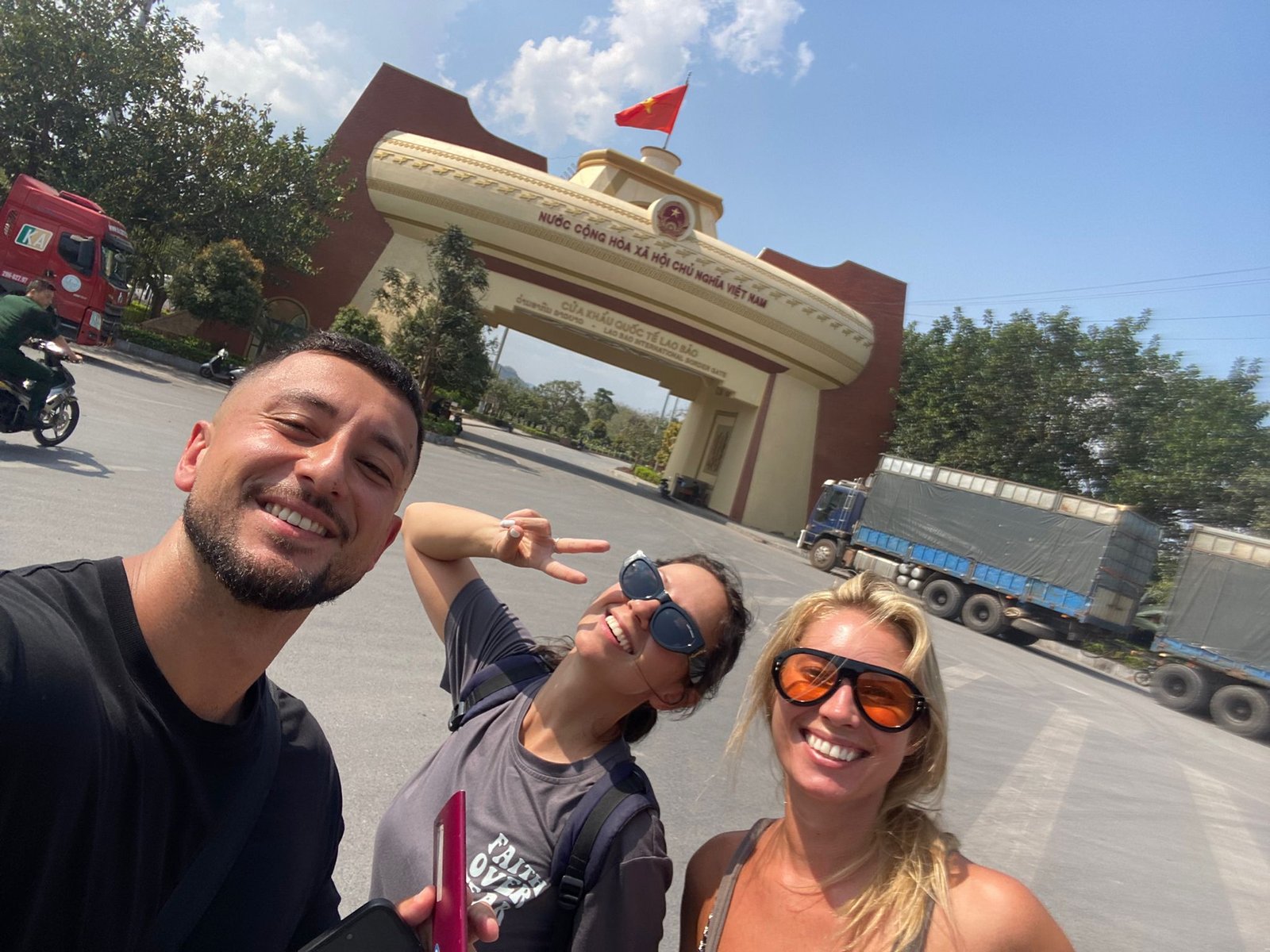
The crew is from Quang Tri, not a Hue driver who has learned the border on the job. Two counters
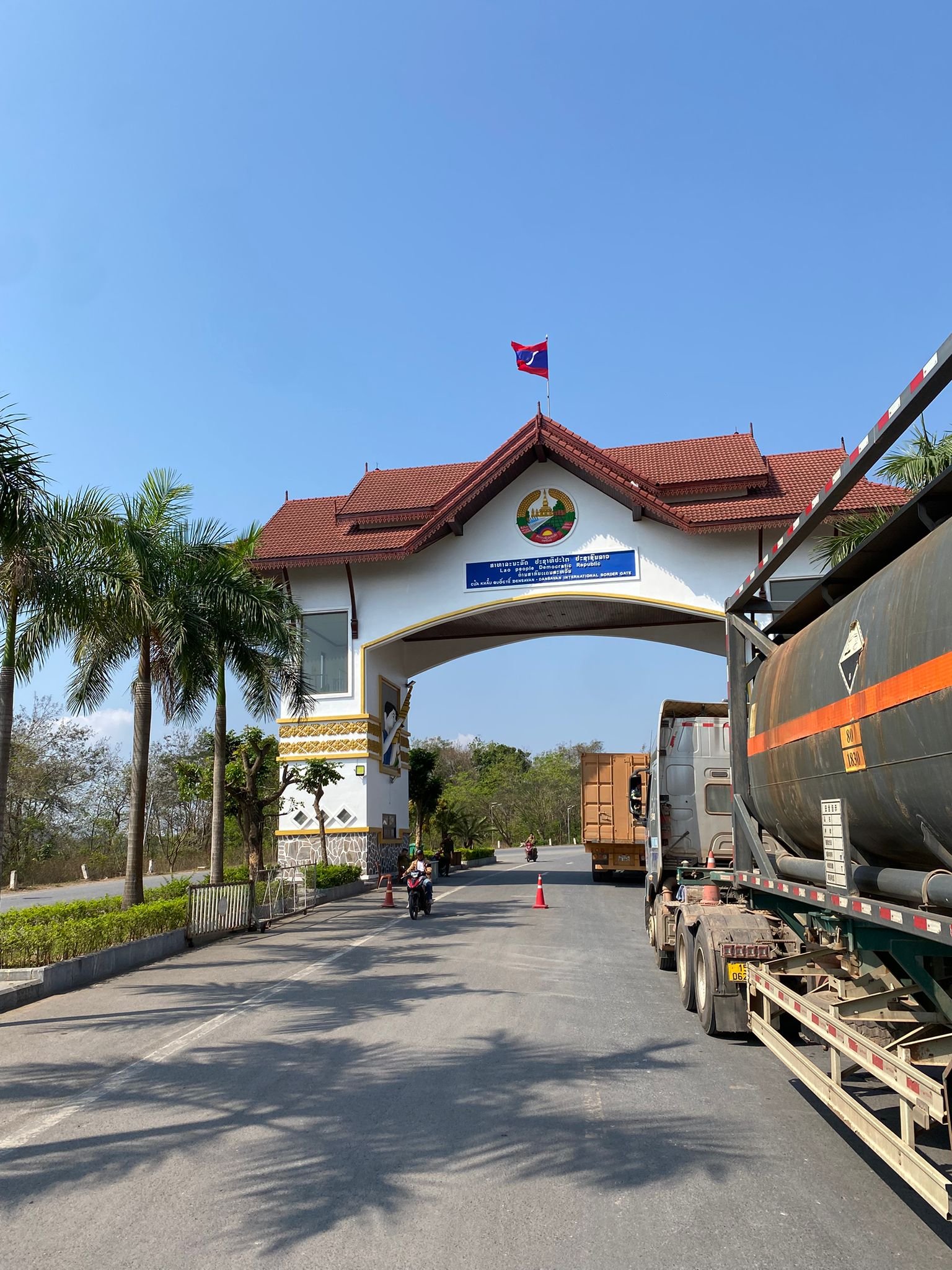
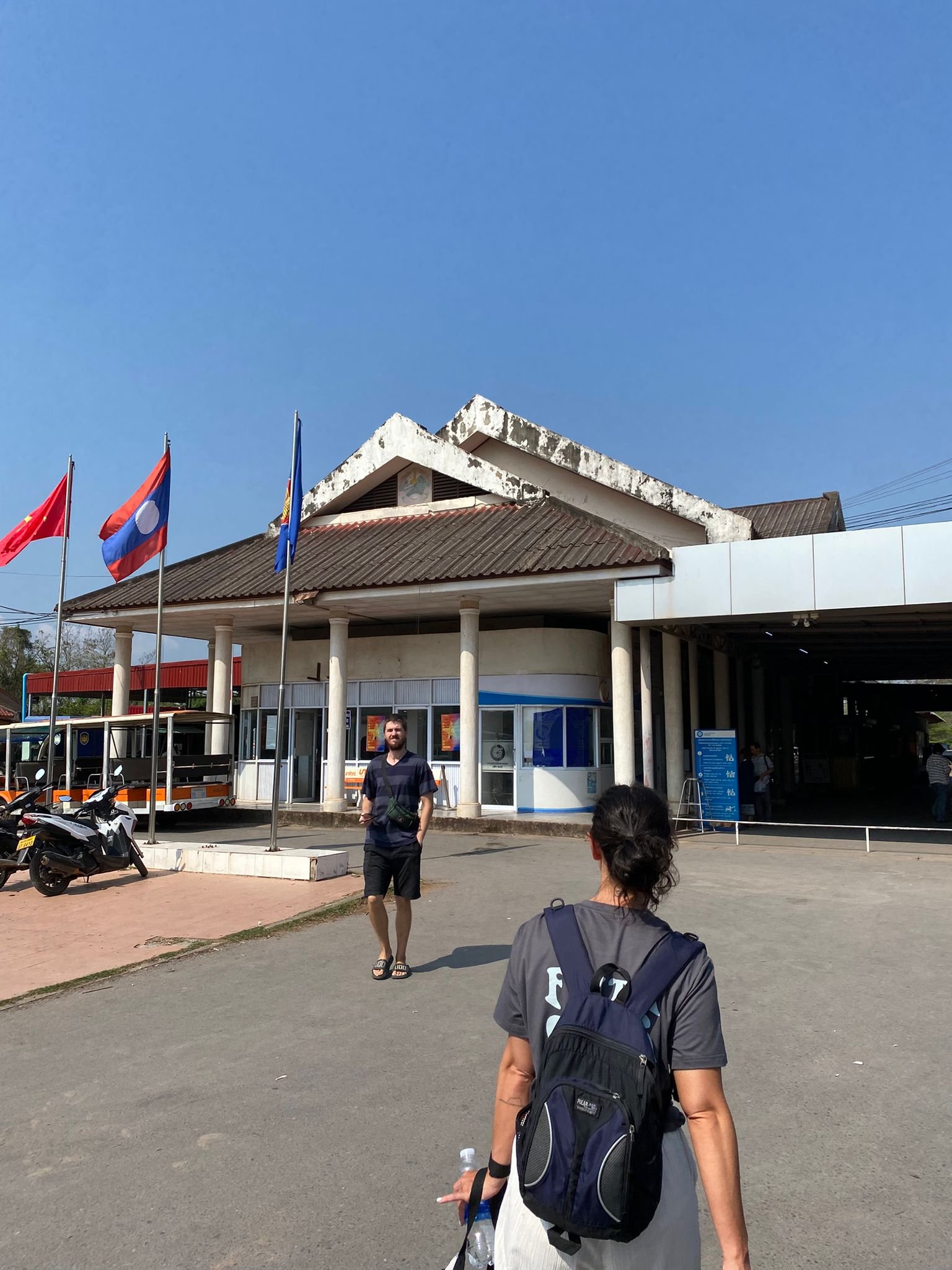
sit a short walk apart: Vietnam exit at Lao Bao, then Laos entry at Dansavanh, a few hundred
metres west past the Se Pon bridge. In practice the exit stamp lands between 08:30 and 09:30 and
the Laos side is done before 10:30, and the fixers carry the forms rather than handing you a
clipboard at the window.
At the Dansavanh counter the Laos visa on arrival is cash only, around the 40 USD mark for most
passports, and the officers do not like breaking large notes. Two 4 by 6 cm photos cover the
application, and a clean, unfolded fifty is easier on everyone than a hundred. If you would
rather count your own money than trust a driver to, the full breakdown of the Laos visa on arrival
covers the fees, the currencies the counter takes, and the LDIF form you file before you travel.
The desk also checks your paperwork before the car moves, which is where most problems are
actually caught. The commonest real refusal at Lao Bao is not a paperwork technicality; it is a
single-entry e-visa already spent by the exit stamp. If the crew sees that coming, you hear
about it in Hue, not at a window forty people deep.
Gate opening hours and holiday closures
are worth five minutes if your stamp date is fixed.
The drive west, and the one thing that slows it down
The run leaves Hue north on QL1A, covers about 60 kilometres to Dong Ha in 1.5 to 2 hours, then
turns west onto QL9. That second leg is the one worth understanding. QL9 measures 82.66
kilometres from Dong Ha to the gate, there is still no Cam Lo to Lao Bao expressway, and five
repair projects run along it, so cars, coaches, container trucks and motorbikes share a single
surface for the whole way.
The pinch point is the Cam Lo interchange area, where the roundabout near the overpass backs up,
and it backs up worst in rain and wind. Drivers leave Hue early partly to clear that stretch
before the freight does. Two small things follow from all this: fill the tank in Dong Ha,
because fuel stations thin out west of Khe Sanh, and do not count on a card anywhere on QL9.
If you want the turn by turn version, with the Khe Sanh stretch and the last climb to the gate,
the Hue to Lao Bao route guide
covers it in detail.
Who does not need to book this
Some people arrive here who do not need a car at all, and it is cheaper to say so. If you hold a
valid multiple-entry e-visa, leaving the country and coming back is already covered and you need
nothing from us. If your passport is on the 45-day exemption list, you re-enter on a fresh
exemption stamp, and the local bus from An Hoa station will do that job for a few hundred
thousand dong if you have the day to spare.
A run with a car earns its price in narrower cases: an extension was refused or would not arrive
in time, you hold a single-entry e-visa that is about to be used up, your stamp date is fixed
and you cannot gamble two working days on a portal, or you would rather not spend the day on
QL9 juggling three bus changes with your luggage. Ask what the cheaper option looks like and you
will get a straight answer.
The cheapest way to run from Hue
works the bus numbers honestly against the shared car, and
the 2026 price list
shows what each option actually costs before you message anyone.
Storms, and the weeks that change the plan
From September to November the corridor misbehaves. Hue's heaviest rain falls in October and
November, and the part of the route that suffers is not the highway north but the climb west of
Khe Sanh, where the mountain leg slides. During a September front the Lao Bao side logged
178 mm of rain overnight and a culvert near Border Guard Post 38 slipped two metres; on the same
cycle, several provincial roads in the district went under.
The road gets checked again at 04:00, and when the western leg is under water the gate day moves
earlier or the run holds until it clears. If your stamp date is close, keep three or four days
of slack rather than one, and if you were counting on the train to Dong Ha as the fallback,
remember that the railway runs beside the same weather and was cut for three days in the last
flood cycle.
What the rainy season does to this route
covers the monthly rainfall and the QL9 stretch that fails, and
storm days
explains what a typhoon warning does to the flights out of Phu Bai.